What is Putty in Construction
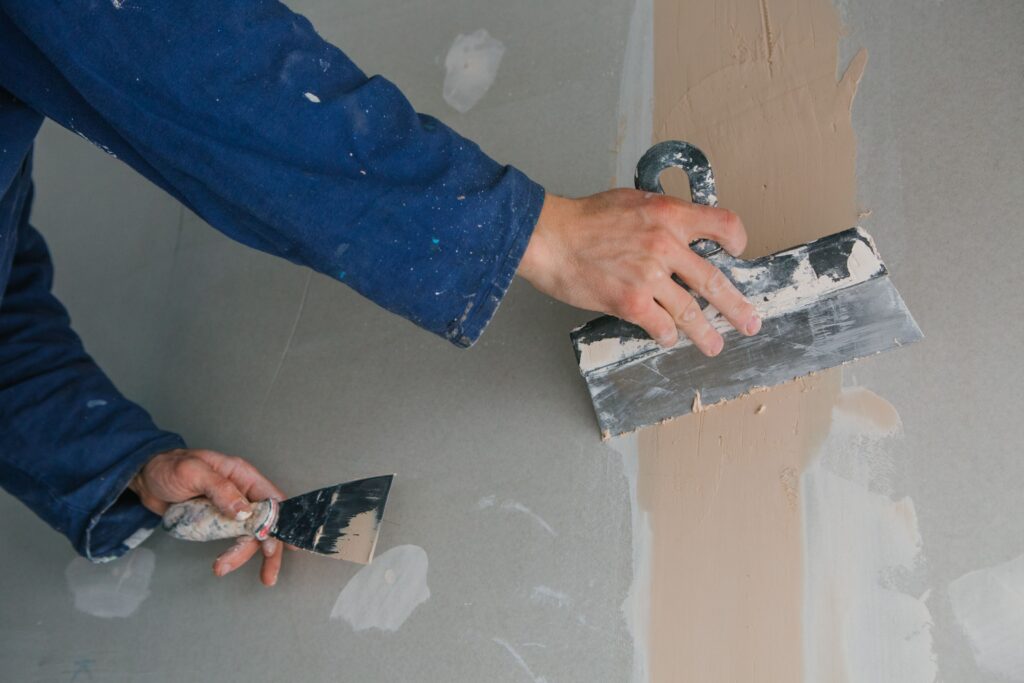
Putty in the world of construction is a smooth paste and similar to material which is used on the walls and ceilings before painting. The principal objective of using the putty is to make the surface of the wall flat and even by filling in the small cracks and other imperfections found on the plastered walls. After the plastering of the walls, there may be few patchy places that are not very smooth, uneven textures, or small holes might have developed. With the putty application, the surface will become smooth and even so that no other finishing work is required.
The standard components of putty are white cement, polymers, and fine minerals. The latter add strength and durability as well as smoothness to the product. Some types of putties are directly useable, while others are in powder form that requires mixing with water for preparing the paste. Depending on the categories, the putty can be used on both inner and outer walls. Acrylic putty is light in weight, dries quickly, and is perfect for indoor use. On the other hand, white cement-based putty is tougher and thus suitable for outdoor walls that are subject to weather, moisture, and sun.
Putty is not only a smooth surface provider but also a wall protector against minor damages and moisture. Small cracks can’t be allowed to spread, and putty works as a base through which paint can adhere better. Paint, if applied on a wall without the use of putty, may not cover the surface uniformly and may also crack or peel off after some time. A good putty application would thus assure aesthetically pleasing and long-lasting walls.
What is the Use of Putty in Painting
The wall surface preparation is the main function and role that putty plays in painting. It guarantees that the resulting paint will be smooth, bright, and even. If paint is to be applied while the wall is uneven, it can absorb differently in places which will result in a variation of color and texture. But putty will fill the holes, cracks and uneven spots and then the paint will be able to spread evenly thus giving a flawless finish.
Using putty, in addition, contributes to the reduction of paint consumption. A wall that has been smoothened and sealed absorbs less paint than a rough surface. Saving money this way not only improves the paint’s durability but also reduces the duration of repainting cycles. The walls that have undergone putty treatment are less prone to develop cracks or peel, hence, the paint is preserved for a longer time.
Moreover, putty acts as a protective barrier that boosts bathrooms and kitchens’ resistance to small damages and moisture. This is particularly significant for outdoor walls where the paint is affected by the weather. Putty guarantees that no water will penetrate into the wall, thus, paint will not be subjected to bubbling or peeling.
Generally, for wall preparation, the procedure particularly consists of cleansing the surface, if putty comes in powder form then powdering, applying the primer, waiting for it to dry, and putting the second coat for the nice, uniform finish. Then, the wall is ready to be primed and painted. This order brings about the best results, making the walls not only stunning but also long-lasting.
In a nutshell, putty is not merely a cosmetic addition in painting. It prolongs the life of painting as well as the delight of its aesthetic quality and the economy of its application. It smoothens the wall surface, guards it against moisture, and facilitates the proper adherence of paint. The use of putty is one little step in the process that brings about professional-quality wall finishes that are both durable and clean-looking.