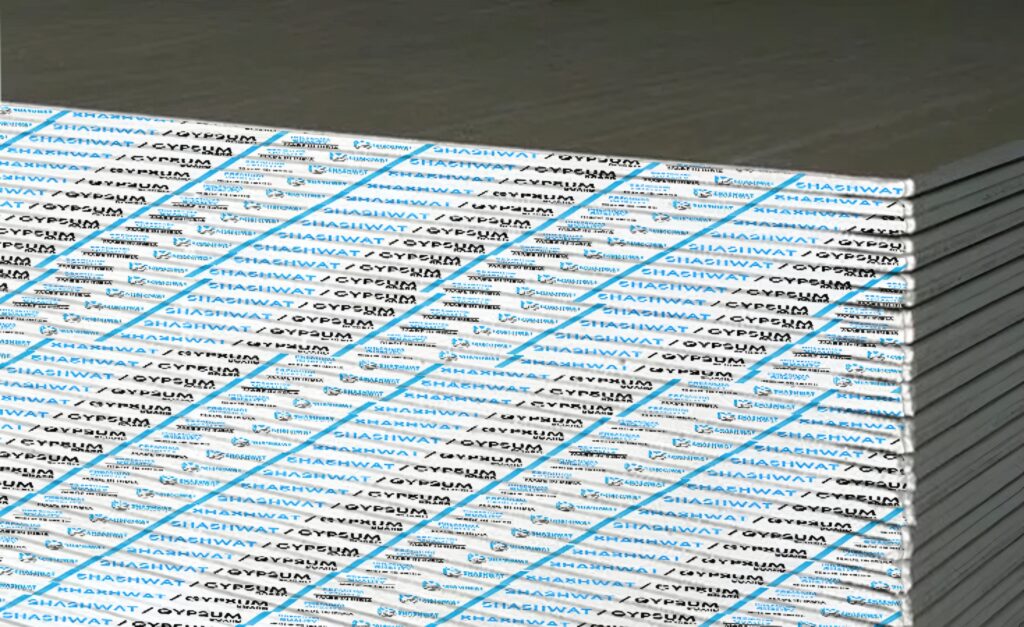
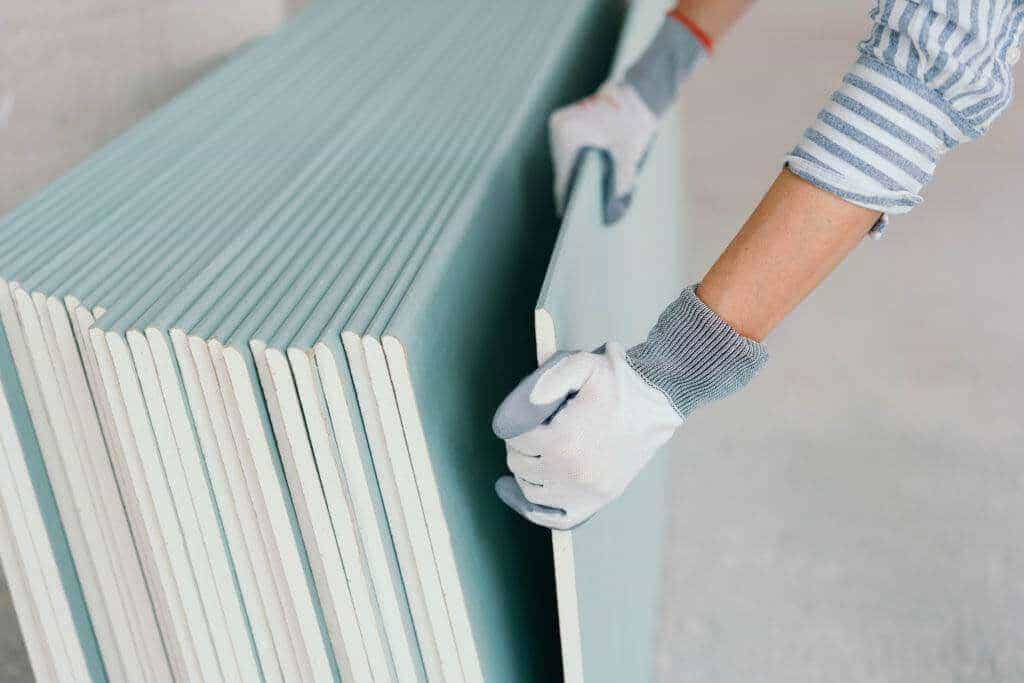
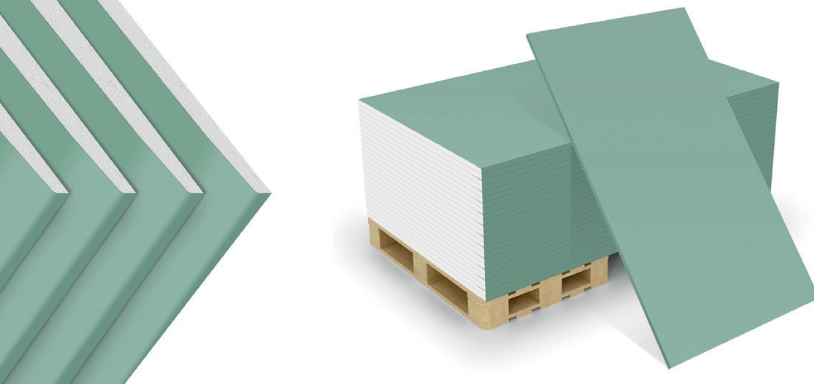
Choosing the size: The most common size is a gypsum board 4 x 8 feet sheet.
Choosing the thickness:
– For curves and arches, use a 1/4 inch gypsum board.
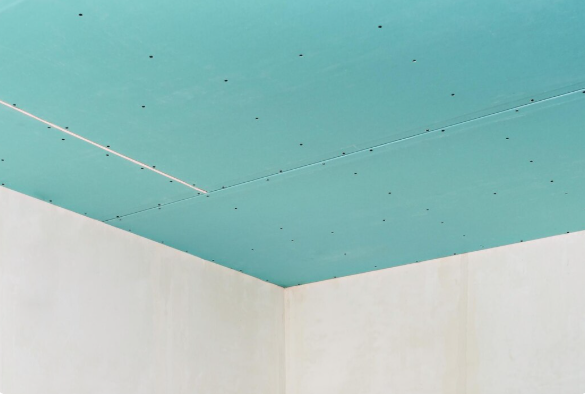
– For ceiling repairs, a 3/8 gypsum board is lightweight and works best.
– For regular walls, a gypsum board 1/2 inch is the strongest and most popular choice.
– For office cabins and soundproofing, use a 5 8 gypsum board.
Using adhesive: To hold the board tightly, apply a gypsum board adhesive on the metal frame.
Expansion joints: To prevent cracks due to temperature changes, use a gypsum board expansion joint every 30 feet in long walls.
Finish levels: To get the best look, you can choose from different gypsum board finish levels (Level 0 to 5). Level 4 or 5 gives the smoothest finish for homes.
Here is how gypsum board compares to other traditional materials to help you make the right choice:
Gypsum Board vs POP
Both gypsum board and Plaster of Paris (POP) are used for ceilings, but they are very different:
- Gypsum board comes in ready-made sheets, which makes the work clean, neat, and very fast.
- POP must be mixed with water on-site, which takes days to dry and creates a lot of mess in your home.
- Gypsum board gives you a perfectly flat surface right away.
- POP allows for complex handmade designs, but it takes much more time and labor.
Gypsum Board vs Drywall
Gypsum board and drywall are made of the same materials, and there is no big difference between them:
- Drywall is just another name for gypsum plasterboard, which is very popular in Western countries.
- Using drywall means you do not have to wait for wet cement plaster to dry.
Gypsum Board vs Plywood
Both are used for cabins and false ceilings, but they have very different properties:
- Plywood is made of wood, so termites and moisture can easily damage it. It is also quite expensive.
- Gypsum board is completely termite-proof, fire-resistant, and much cheaper than plywood.
Gypsum Board vs Cement Board
The weight and usage of these two boards are very different:
- Cement boards are very heavy and hard, mostly used for exterior walls.
- Gypsum board is lightweight, easy to cut, and gives the best finish for indoor ceilings.
Gypsum Board vs POP False Ceiling
Both make your ceilings look beautiful, but their finish level is different:
- Gypsum board ceilings are perfectly flat and smooth because they are machine-made.
- POP ceilings depend entirely on the worker’s skill, so the surface can sometimes look uneven.
Gypsum Board vs PVC Board
There is a big difference between plastic and natural minerals:
- PVC boards are made of plastic. If a fire breaks out, they melt easily and release toxic smoke.
- Gypsum boards are made of natural minerals, making them safe and highly fire-resistant.
Gypsum Board vs PVC Ceiling
Their look and paint choices are very different:
- PVC ceilings look like plastic, and you cannot paint over them easily.
- On a gypsum ceiling, you can apply any premium paint or texture to give your home a luxury look.
Gypsum Board vs Calcium Silicate Board
Based on cost and usage, these two boards differ in these ways:
- Calcium silicate boards are highly water-resistant but are very expensive and hard to install.
- Gypsum board is budget-friendly, easy to cut, and perfect for regular home needs.
Today, there is no better choice for a beautiful, strong, and safe home than a gypsum board. It saves your time, water, and money.
People Also Ask
What is gypsum board used for?
Gypsum board is mainly used to make beautiful false ceilings and lightweight partition walls in homes and offices. It also covers rough concrete walls to give them a perfectly flat and smooth look.
- Which is better, PVC or gypsum?
Gypsum is much better than PVC in terms of beauty, finish, and safety. You can paint or apply wallpaper on gypsum boards. Also, gypsum is fire-safe, whereas PVC is plastic and can melt during a fire.
- Is gypsum board waterproof?
Standard gypsum boards are not waterproof. However, for wet areas, you can use a specially designed gypsum moisture resistant board which contains water-blocking silicone in its core.
- What are the disadvantages of gypsum board?
Some common disadvantages are: Standard boards can get damaged by heavy water leaks or continuous dampness. Also, they are not as hard as concrete, so you cannot hang very heavy items directly on them. However, if a board gets a dent, you can fix it easily with a gypsum board patch.
- What is the price of gypsum board per sheet?
The price of a gypsum board sheet depends on its size, thickness, and type. Standard boards are very affordable. Since they save the double cost of cement plaster and putty, they are highly budget-friendly. Shashwat Wallcare offers premium sheets at great prices.
- What is the price of 12mm gypsum board?
A 12mm board is the most common thickness for ceilings and walls. The price varies by location and brand. Shashwat Wallcare’s gypsum board 1/2 inch (around 12.7mm) gives great strength at a very reasonable price.
- What is the price of a 4×8 gypsum board?
A 4×8 feet sheet is the most popular size. The price of a gypsum board 4 x 8 sheet depends on whether you buy a standard board or a gypsum moisture resistant board. This size is perfect for quick wall coverage.
- What is the price of 50kg gypsum powder today?
The price of a 50kg bag of gypsum powder depends on market demand and the brand. In board manufacturing, only high-purity gypsum is used to give the sheets excellent strength and durability.
- What is Type X gypsum board?
A type x gypsum board is a special fire-resistant sheet. Its core has non-combustible glass fibers that help it withstand fire much longer than standard boards, meeting strict safety codes.